
Revenge Porn Laws in South Carolina and Ireland
Ireland and South Carolina. Despite being 3,731 miles apart, they share a population of slightly more than five million people. Both places fit the stereotype of being laid-back, welcoming, and a little crazy about country music. Unfortunately, the similarities do not end there. Both jurisdictions have a similar sinister problem that affects approximately 8% of American women: Revenge Porn (Ruvalcaba and Eaton, 2020).
My name is Mark Costello and I’m an Intern here at Switch. I am a recent graduate of Queen’s University Belfast with a master’s degree in Violence, Terrorism and Security. I researched human trafficking for my thesis and am excited to expand my knowledge and use it in the fight against sex trafficking in the Upstate of South Carolina with Switch. As a native of rural Ireland, my first real-life ‘experience’ with human trafficking happened when I landed in Greenville and announcements echoed throughout the airport, outlining the warning signs of being trafficked. It hit home for me that I’d be living and working in one of six Upstate counties on the state’s “top ten worst” list for human trafficking (WYFF, 2022). As a result, I chose to compare Ireland and South Carolina in terms of shared experiences with revenge porn, as it has recently been recognized as a variation of sex trafficking in relation to pornography.
Revenge Porn or Image Based Sexual Abuse (IBSA) refers to three key behaviors: threatening to share nude or sexual photographs; creating, taking, or recording nude or sexual images; and sharing or distributing nude or sexual images (Flynn and Henry, 2021). For the purposes of this blog, I will refer to the term IBSA rather than revenge porn because I believe the latter focuses solely on the perpetrators’ objectives rather than the harms suffered by victims/survivors. IBSA can happen to anyone, regardless of their gender or sexual orientation. However, women were 1.7 times more likely than men to be victimized in a 2017 study, and men were, by far, the most common perpetrators of the abuse (Franks, 2017). Separately, IBSA is used to lure people into the sex trade by traffickers and pimps (Franks, 2017). This is why I chose to write about a comparison of this problem since it occurs in two entirely different jurisdictions and is legislatively new in both. Why did it take so long for this problem to be legally recognized in two democratic societies?
Ireland is located in the European Union (EU) and has been a member since 1973. Despite Ireland’s positive relations with the EU and its members, the EU’s General Data Protection Regulation was not enforced within its borders. As a result, EU member states, such as Ireland, have taken unilateral steps to strengthen protection in a variety of areas, particularly when it comes to the sharing of sexual images. When 140,000 intimate photographs were leaked online in 2020, it was the catalyst that sparked the crusade for Irish legislation. At the time, it was assumed that some of the photographs, including images of underage girls, were taken without consent from private social media accounts (Coyne, 2020). The Victim’s Alliance, an Irish women’s rights organization, claims that perpetrators targeted Irish women because they were aware of the non-existent law prohibiting the sharing of images without consent.
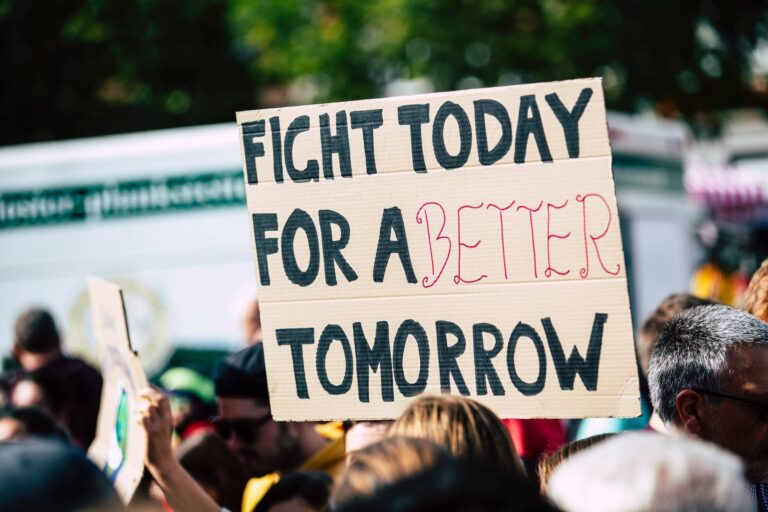
This sparked widespread outrage, with nearly 60,000 people signing a petition demanding that IBSA be made illegal. I believe this outrage was fueled in part by the stark statistic that 1 in every 2 women killed in Ireland between the ages of 18 and 25 since 1996 were murdered by their boyfriends or ex-boyfriends (RTÉ, 2020). In the three years leading up to the leak, three women were brutally murdered on the island, including Ana Kriégel, who was fourteen at the time and was lured to her death by two teenage boys. According to EU data, one in every four women in Ireland experiences physical and sexual violence, and 39 percent of young women (ages 18-29) have experienced emotional abuse by a boyfriend or spouse. Though figures from the Irish IBSA context are difficult to come by, the EU statistics are staggering, if not unsurprising. Violence against women, whether physical or sexual, has been a constant scourge in Irish society. The IBSA leak proved to be the key to uniting public outrage and government action.
Irish women’s visceral outrage, combined with the petition, resulted in legislation being implemented in Irish government buildings. The bill would make it a crime to publish intimate images without consent and with the intent to cause harm. The maximum penalty would be an unlimited fine and/or seven years in prison. If there is no intention to cause harm, the penalty will be a €5,000 fine and/or a 12-month jail sentence (Fletcher, 2020).
The bill, dubbed Coco’s Law after Nicole Fox, who sadly committed suicide after enduring years of horrendous online abuse, was signed into law in February 2021. According to Irish Justice Heather McEntee, “This legislation will not only provide an effective tool to bring to justice those who use technology to harm others, but it will also send a clear message that as a society the sharing, or threat to share, an intimate image of another person without their consent is not acceptable in any circumstance.” (Department of Justice, 2021).
In the words of Bill Hybels, “it is unfortunate that storms draw something out of us that calm seas don’t.” It should not have taken such a vicious cyber-attack, along with Nicole Fox’s tragic death, for the Irish government to recognize IBSA as a serious piece of legislation.
Turning my attention to the other side of the Atlantic, I hope it does not take something equally disastrous to get Bill H4563 through the South Carolina state legislature’s gears. The goal of Bill H4563 is to make cybersexual harassment a punishable offense. At the time of writing, the Bill has 29 sponsors but has yet to be voted on in the House of Representatives before it can be debated in the Senate. South Carolina is surrounded by states that have passed legislation that is similar to that of Ireland. For example, in 2015, North Carolina passed a law requiring that an intimate photo must be tied to a long-term relationship in order to be prosecuted for IBSA (McCarty, 2017). This regrettable loophole was eventually closed in 2017 to include posting sexual images of anyone without their consent (Boniti, 2017). Georgia also made it a felony in 2021 to share any sexually explicit images or videos of another person online without their consent, causing them distress or harm (Heiberger, 2021). Only South Carolina and Massachusetts have yet to pass legislation to address IBSA. As a result, I believe South Carolina is in a similar position as Ireland prior to 2020.
Advocacy groups, like Switch, are frustrated by legislators’ lack of involvement when a bill is now simmering in state government buildings. A similar high-profile incident, as in Ireland, brought the IBSA subject to the public’s attention in South Carolina.
Tiffany Ownbey, the first woman mayor of Belton, South Carolina, became a victim of IBSA in 2020. A former partner recorded an intimate encounter without her consent and threatened to post it online if she broke up with him (Maxwell, 2020). Since IBSA is not regulated, obtaining statistics to get a better picture of the problem in South Carolina is difficult. Using a sample of US adults, a study discovered that 1 in every 25 Americans had someone threaten to post a sexual image without their consent (Ruvalcaba and Eaton, 2020). That statistic applies to a group of female athletes at a South Carolina college in 2019 who were secretly videotaped while changing, with some of the recordings being uploaded online (WJBF, 2019). At the time of writing, no one has ever been prosecuted.
When it comes to IBSA, Ireland and South Carolina follow a similar pattern. But can we do better? I believe there is a lot of room for improvement in the collection of statistics, both at the state and national levels. If IBSA remains a dark figure of crime, we will never know the true scope of the problem and be able to effectively combat it. Secondly, I believe that federal legislation is required in the United States because state laws governing IBSA vary in their language and application, affecting victim protection and successful prosecution of offenders. This could then require states to provide yearly statistics as well as unilateral victim protection. Finally, I believe that any bill, both in Ireland and the United States, should include intervention and prevention measures to help protect early youth from IBSA. It is better for everyone if we can solve this problem before more people’s lives, like Nicole and Tiffany’s, are turned upside down.
Reference List
- Boniti, L. (2017) North Carolina expands revenge porn law, Spectrum News 1 Charlotte. Available at: https://spectrumlocalnews.com/nc/charlotte/news/2017/11/30/north-carolina-expands-revenge-porn-law.
- Coyne, E. (2020) “‘The lowest of the low’ – Hundreds of thousands of intimate images of Irish women released online without consent,” Irish independent, 19 November. Available at: https://www.independent.ie/news/the-lowest-of-the-low-hundreds-of-thousands-of-intimate-images-of-irish-women-released-online-without-consent-39766849.html
- Department of Justice (2021) Minister McEntee marks Safer Internet Day by commencing Coco’s Law, Gov.ie. Available at: https://www.gov.ie/en/press-release/706c9-minister-mcentee-marks-safer-internet-day-by-commencing-cocos-law/.
- Fletcher, O. (2020) “Legislation alone will not tackle Ireland’s ‘revenge porn’ problem,” Irish times, 25 November. Available at: https://www.irishtimes.com/opinion/legislation-alone-will-not-tackle-ireland-s-revenge-porn-problem-1.4418345.
- Flynn, A. and Henry, N. (2021) “Image-based sexual abuse: An Australian reflection,” Women & criminal justice, 31(4), pp. 313–326. https://doi.org/10.1080/08974454.2019.1646190
- Franks, M. A. (2017) “Redefining ‘revenge porn’ reform: A view from the front lines,” Florida law review, 69(5), p. 2. Available at: https://scholarship.law.ufl.edu/flr/vol69/iss5/2.
- Heiberger, S. (2021) New Georgia law makes revenge porn a felony, WRDW-TV/WAGT-TV. Available at: https://www.wrdw.com/2021/05/11/new-georgia-law-now-makes-revenge-porn-a-felony/.
- Maxwell, A. (2020) A SC mayor pushes for revenge porn law after she says she was a victim, CBS17.com. Available at: https://www.cbs17.com/news/a-sc-mayor-pushes-for-revenge-porn-law-after-she-says-she-was-a-victim/.
- McCarty, A. (2017) Tougher “revenge porn” law enacted in North Carolina, WFMY. Available at: https://www.wfmynews2.com/article/news/local/tougher-revenge-porn-law-enacted-in-north-carolina/83-497173605.
- RTÉ (2020) What is “revenge porn” and is it illegal in Ireland?, RTÉ. Available at: https://www.rte.ie/lifestyle/living/2020/1120/1179389-what-is-revenge-porn-and-is-it-illegal-in-ireland/.
- Ruvalcaba, Y. and Eaton, A. A. (2020) “Nonconsensual pornography among U.S. adults: A sexual scripts framework on victimization, perpetration, and health correlates for women and men,” Psychology of violence, 10(1), pp. 68–78. doi: 10.1037/vio0000233.
- WJBF (2019) Police: Secret videos of female athletes at an SC college posted to porn site, WJBF. Available at: https://www.wjbf.com/news/police-secret-videos-of-female-athletes-at-an-sc-college-posted-to-porn-site/.
- WYFF (2022) Greenville among 6 Upstate counties on state’s top 10 worst list for human trafficking, WYFF. Available at: https://www.wyff4.com/article/greenville-upstate-counties-sc-top-10-worst-list-human-trafficking/38712069.




One Comment